




 HOW WE GROW BUSINESSES

 RTLS ANALYSIS
RTLS - Real-Time
Location Analysis
Enhance process control with RTLS (Real-Time Location System) technology.
Automatic location tracking enables real-time monitoring of assets, vehicles, and employees – improving efficiency and safety in industrial facilities and logistics centers.
Discover how RTLS solutions can optimize management in your organization!
 +48 12 296 49 31
RTLS - Real-Time Location Tracking
RTLS enables precise tracking and identification of objects – such as employees, components, and transport systems (e.g., tugger trains, forklifts) – within production halls, warehouses, or logistics centers.

Data-Driven Insights
Location data collected in real time is analyzed by our consultants and analysts to support fact-based decisions in production, logistics, and warehouse operations.
This approach enables strategic improvements based on hard data – leading to cost savings, higher efficiency, and reduced waste.
Measurement Process
Measurements are conducted over a defined period and cover selected objects involved in the studied process.
The final deliverable is a report containing analyzed data and recommendations to increase process stability, reduce losses, and lower operational costs.

RTLS (Real-Time Location System)
RTLS (Real-Time Location System) is a technology that revolutionizes the way resources are managed in modern manufacturing plants and warehouses.
It enables real-time monitoring and measurement of processes. You can track the location of tools, vehicles, containers, components, and even employees -eliminating losses caused by searching for resources or inefficient space organization.
At LUQAM, we implement an RTLS system designed for industrial environments – scalable and tailored to the realities of your production.
What is RTLS and what are its capabilities?
RTLS (Real-Time Location System) enables continuous tracking of objects and people within a manufacturing plant or warehouse. The RTLS system is based on a network of sensors, receivers, and tags attached to tracked items, allowing for location analysis, process measurement, and data transfer to a central platform. As a result, production, logistics, and maintenance managers gain access to precise real-time data on resource movement. Real-time location systems can analyze transport routes, identify inefficiencies, detect bottlenecks, and optimize workspace utilization.
Importantly, the RTLS system is fully scalable. It allows for monitoring and process measurement in selected areas or for specific types of resources, with the option to expand to additional lines, departments, or buildings. Through integration with MES, WMS, or ERP systems, location data can be linked to specific production orders, material batches, or schedules. Such operational transformations significantly increase transparency and data accuracy across the entire supply chain.
Why implement an RTLS system?
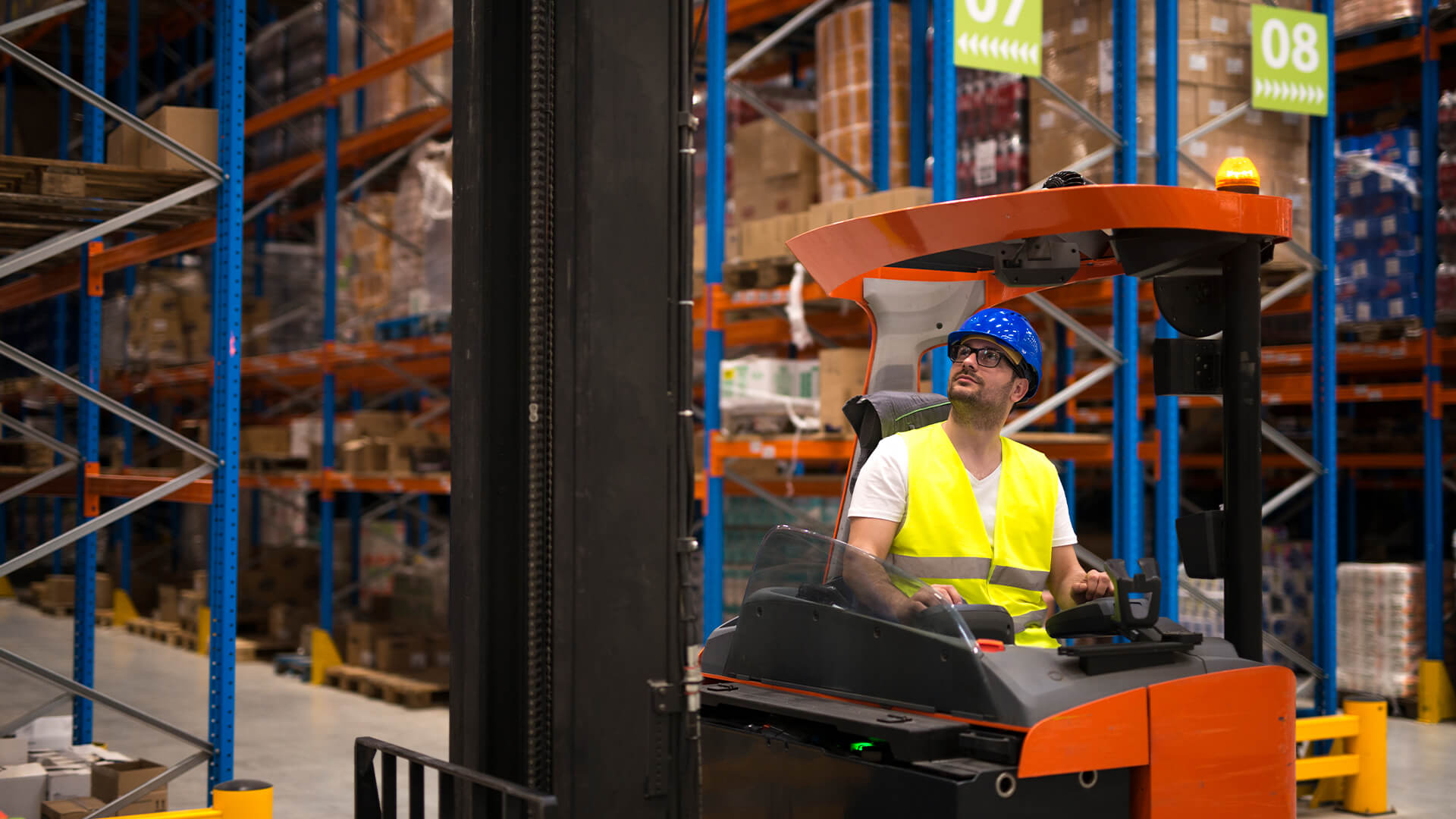
Real-Time Location Systems deliver measurable operational and financial benefits. Companies using this technology can locate resources faster, eliminate losses, and reduce the number of unplanned downtimes. The risk of human error decreases, and safety levels increase, as the system enables automatic monitoring of vehicle movements. Additional benefits include:
- full visibility of resource flow in real time,
- reduced time spent searching for tools, materials, and vehicles,
- automatic tracking of production orders and batches,
- identification of bottlenecks and inefficient transport routes,
- improved utilization of production and warehouse space,
- integration with MES/WMS/ERP systems for automated reporting and planning.
Process measurement and location analysis lead to shorter production cycles, lower operating costs, and higher planning accuracy – strengthening the company’s market position and its resilience to changes in the business environment.

Why implement process monitoring and measurement with LUQAM?
At LUQAM, we combine expertise in operational management with hands-on experience in implementing digital solutions for the manufacturing industry.
Every RTLS implementation begins with a detailed process audit and flow analysis to design a system precisely tailored to your organization. The proposed solutions are scalable, flexible, and intuitive, allowing you to achieve quick results without costly or time-consuming reengineering.
We ensure that RTLS supports – rather than disrupts – your existing processes. Our implementation approach is smooth and secure, so the system delivers real operational benefits from day one.

How RTLS Supports Production Process Optimization
RTLS insights support targeted improvement initiatives.
Use cases include:


production flow optimization to reduce lead time,

operator workload analysis, considering both operational and transport activities,

monitoring downtime due to missing inputs or uncollected outputs,

cycle time standardization,

identifying layout improvements or potential for supermarket implementations.
Benefits of RTLS Analysis

Resource Utilization
Tracking
Monitor movement and activity in real time for both personnel and transport systems.
RTLS enables:
- Comparative analysis across time periods (shifts/days),
- Evaluation by zone, area, or team,
- Insights into utilization rates.

Production Cycle
Mapping
Measure time taken for production cycle operations and component flow to:
- Identify inefficiencies and bottlenecks,
- Define optimal KPIs and cycle time norms.

Cost Driver
Analysis
Track object activity to gather input data for activity-based costing (ABC).

Heatmaps and Spaghetti
Diagrams
Visualize movement patterns and behavior to:
- Analyze time spent in specific zones
- Identify non-standard movements or inefficiencies
- Support SMED or AM workshops

Production Zone
Layout Assessment
Real data reveals unused space or layout inefficiencies.
Recommendations may include:
- Machine repositioning,
- Transport route redesign,
- Space reallocation.

Dwell Time and Bottleneck Detection
Dwell time metrics reveal:
- Process productivity,
- Actual process flow,
- Location of bottlenecks.

Transport System
Optimization
Monitor intralogistics infrastructure usage to:
- Define optimal fleet size,
- Minimize unnecessary transport,
- Benchmark transport efficiency across zones.

Identifying High-Impact Optimization Projects
RTLS data reveals operational issues and highlights improvement areas such as:
- WIP optimization,
- Cost reduction,
- Idle time reduction,
- Material flow improvement.
Post-implementation measurements confirm the effectiveness of recommended changes.


contact form
Need Expert Support?
Schedule a consultation today!

Daniel Taborski


newsletter
Join our newsletter
 HOW WE CREATE VALUE
 HOW WE GROW BUSINESSES
HOW WE DEVELOP TEAMS

LUQAM Sp. z o.o. Sp.k.
Kamieńskiego 47
30-644 Kraków
POLAND
KRS 0000442347
NIP 6793087067
REGON 122736324
LUQAM Sp. z o.o. Sp. k.
CEO: Łukasz Ekiert
Equity Capital: 250 000 PLN
